I am an administrator
Manage processes, employees, and strategic data from Nala
What do you want to do today?
Quickly find the guide you need.
Nala admin series 2026
An exclusive space for our administrators to explore new capabilities with Nala.
Explore by module
Before you begin

General administration

Settings: Define units, positions, contract types, cities, custom fields, integrations, and notifications.
Role management: Assign and manage administrator, manager, and employee roles.

Notification settings: Customize the communications Nala sends, edit each template, and define general header and footer settings. View guide.

Bulk upload and employee management
Bulk Employee Upload: Quickly and easily import large volumes of employee data using a standard template. Optimize your work by uploading multiple records at once, ensuring accuracy and efficiency.
Employee Management: Add new employees, update their data, or unlink them when needed. Keep your team’s information always up-to-date easily and quickly.

Microsoft sign-in (SSO): what the administrator authorizes
When a Microsoft Entra administrator approves Nala sign-in, they authorize the Nala application to use Microsoft as the identity provider for their organization’s work accounts.
What does this authorization allow?
- Verify the person’s identity and let them sign in to Nala with their corporate Microsoft account.
- Receive the basic data associated with the permissions requested by Nala:
openid,email,profile, andUser.Read. This includes the authenticated user’s account identifier, name, email address, and basic profile. - Apply consent to the organization when the administrator chooses to consent on its behalf, according to the policies configured in their Microsoft Entra tenant.
What does it not imply?
- Nala does not receive or store the user’s Microsoft password.
- This authorization does not provide access to email, calendars, OneDrive files, or other Microsoft services, because Nala does not request those permissions for sign-in.
- Accepting SSO does not automatically make a person a Nala administrator or expand their permissions within the platform. Roles and access continue to be managed in Nala.
Official technical reference: OpenID Connect (OIDC) on the Microsoft identity platform.
Onboarding: A successful start

Managing new hire onboarding

Configuring Onboarding Flows: Request key documentation and information to streamline the onboarding process. Ask for essential documents like ID cards and customize fields as needed, for example, shoe size if uniforms are required or the number of children for holiday gifts. Additionally, you can track whether new employees have reviewed important materials, such as a welcome video, HR policies, or internal regulations.
Monitoring New Employee Progress: Ensure each employee completes all onboarding tasks. If they forget to upload a mandatory document or upload the wrong file, send them a notification as a friendly reminder. This facilitates a smooth start and guarantees all steps are completed on time.

Monitor the experience of new hires and act based on performance and satisfaction indicators to continuously optimize hiring and onboarding processes.
Performance and Development: Driving Growth

Plan Evaluations
Leadership, Potential, Performance, and Climate Evaluations: Easily design and activate evaluations. Define participants, customize criteria, and ensure feedback aligns with your company’s goals.
Evaluation Process Automation: Optimize evaluations by scheduling reminders and setting deadlines. Keep the process organized without manual follow-ups, ensuring efficient management.


Centralize and keep your Job Descriptions up to date.
Customize your template and create descriptions for all your roles; this not only speeds up recruiting but also serves as a solid foundation for building your internal development paths.
Download all job descriptions as PDFs
Centralize and keep your Job Descriptions updated

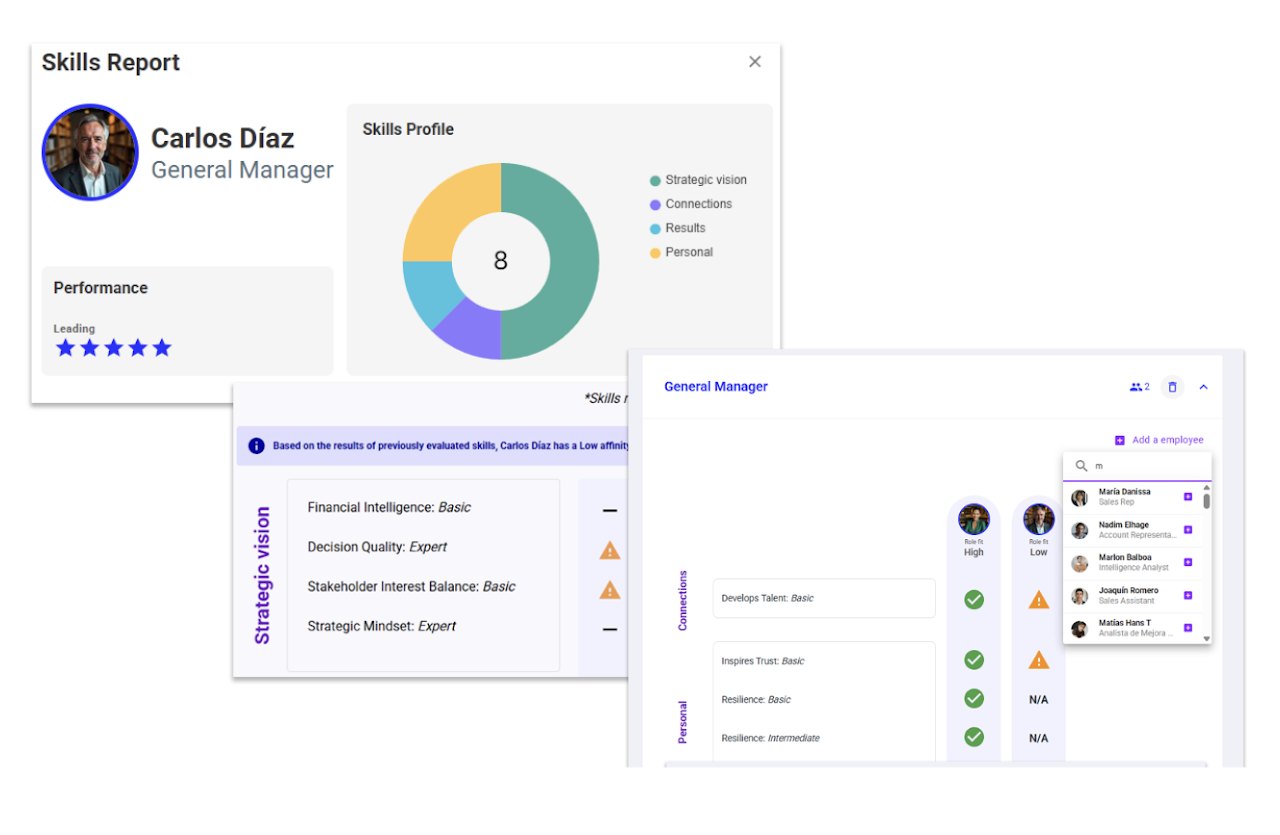
Manage and keep your Competency Dictionary updated and measure skills with Nala.
Allows measuring current role skills and comparing employees with future roles to design growth paths and link action plans accordingly.
Both employees and managers have access

Critical Roles 💎
Key Role Identification
Mark critical roles essential for business continuity and success. These are positions with a high impact on operations, strategy, or leadership.Succession Planning 🚀
Track potential successors for critical roles. Identify employees with the skills and potential to take on these roles and design development plans to prepare them.

📝 BEST PRACTICES
✅ Keep information on critical roles updated according to business needs.
✅ Define successors for each key role and establish personalized development plans.
✅ Monitor progress regularly to ensure alignment with succession planning and organizational goals.


Understanding Key Indicators

Nala Analytics
The Talent Analytics Module in Nala provides managers with key data to make informed decisions about their teams. This module includes three main components: new hires, key talent, and the entire company.

Easily view the main indicators of your key talent, new hires, and full team.
Identify high-potential employees and track trends to make strategic decisions.


Turnover Risk
Access a predictive model that analyzes employee turnover risk.
Receive personalized recommendations to reduce that risk.
Track turnover levels in real time and take preventive actions to improve retention.


9-Box Matrix
Organize your employees into categories such as Top Talent, High Performer, or Key Player to get a clearer view of your team’s strengths.
Leverage talent matrix insights to plan succession and career development strategies, ensuring business continuity and growth for your team.
Identify potential leaders and design training programs aligned with their potential and career path.

Using Data for Better Decisions
Turn data into strategic actions.
Identify skill gaps and plan targeted training and coaching.
Benefit from smart recommendations to drive effective actions.
Anticipate team challenges with predictive analytics and make proactive decisions.

📝 BEST PRACTICES
✅ Use Turnover Risk Analysis to identify and prevent talent loss before it impacts the organization.
✅ Leverage the 9-Box Matrix to structure succession planning and employee development.